Processing form
Hand-stemmed FCV tobacco
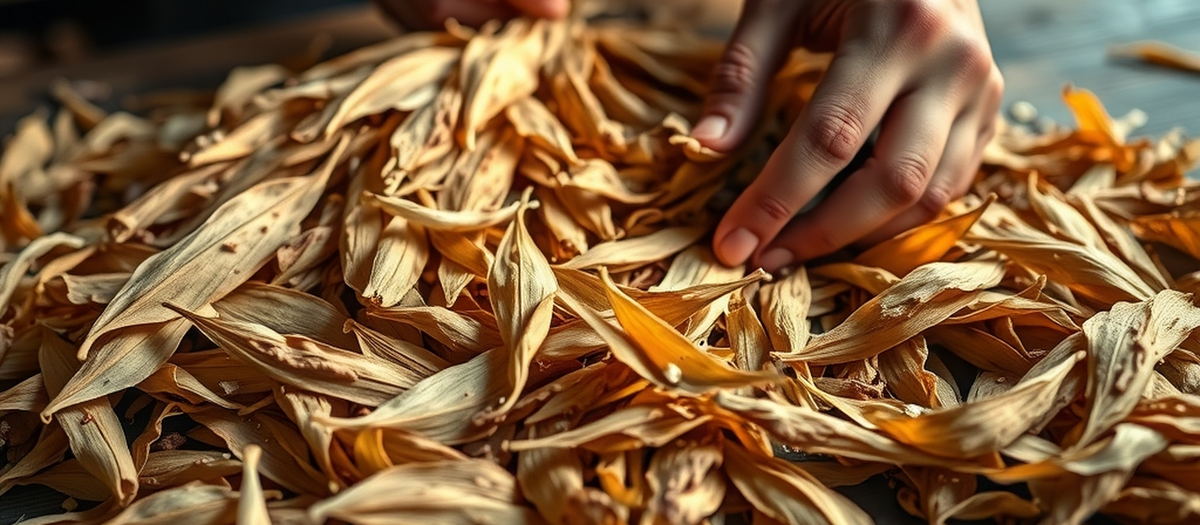
Hand-stemmed FCV tobacco is flue-cured Virginia lamina from which the midrib has been pulled by hand, leaving large, intact half-leaves with very little fines and almost no mechanical damage. It is the form for blenders and product makers who need big lamina pieces, and for buyers who want de-ribbed leaf without the strip-size profile of a threshing line. FCV Tobacco Limited supplies it from Khyber Pakhtunkhwa, graded by stalk position and colour, in full-container lots on FOB terms.
Enquire
Send a specification and receive availability against the current crop year.
WhatsApp our team Or send a written specification →MOQ 1 container (20 MT minimum) · FOB terms, shipped to any port · 50% advance, 50% on FOB
What hand-stemmed lamina is
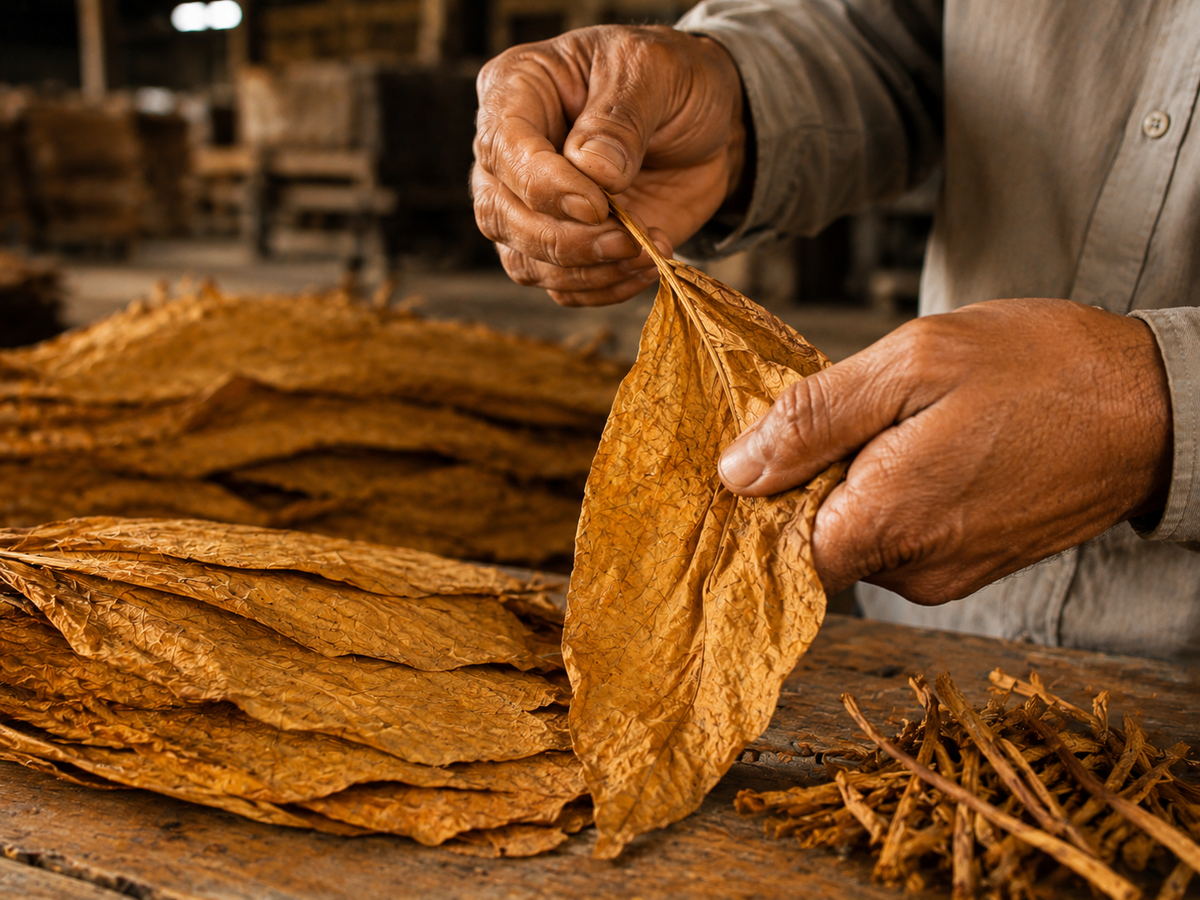
Hand stemming, also called hand stripping, is the oldest way of separating lamina from midrib: a worker holds the cured, conditioned leaf by the butt and pulls the midrib out along its length, leaving two half-leaves of lamina joined at the tip or fully separated. No machine touches the lamina, so it stays in the largest pieces the leaf allows, with clean edges and almost no fines.
The result is de-ribbed leaf that still looks like leaf. Where a threshing line produces strips of a controlled size distribution, hand stemming produces whole half-leaves, and where a threshing line inevitably makes fines and small lamina, hand stemming makes very little. Those two properties, large lamina and low fines, are the reason the form still exists in an industry that has mechanised almost everything else.
How hand stemming works and why it is still used
Leaf destined for hand stemming is conditioned until it is pliable, then stemmed leaf by leaf. The midribs go to the stem stream; the lamina is laid flat, re-graded if needed, conditioned to the packing moisture and pressed into C48 cartons or packed in cartons. It is slow, labour-intensive work, and it is only economic where skilled labour is available at a cost that the value of intact lamina justifies.
Pakistan's growing districts have that labour, and the form remains in demand for a specific set of buyers: makers of products that need large lamina, blenders who want to control cutting themselves, and buyers who find that mechanical stemming damages the leaf more than their product can tolerate. It is not the right form for a high-volume cigarette line that will cut everything to a fixed width in any case; for that buyer, machine-stemmed lamina or threshed strips are cheaper and just as good.
Hand-stemmed versus machine-stemmed lamina
Both forms remove the midrib and leave lamina. The difference is in what the lamina looks like afterwards and how much of it survives in large pieces. Machine stemming, using stemming or stripping machines, pulls or cuts the midrib mechanically at speed; it produces consistent output but breaks more lamina and creates more fines, and it can leave short stem sections in the lamina. Hand stemming keeps the half-leaves intact, leaves fewer stem fragments in the lamina, and generates less dust.
The trade-off is cost and throughput. Hand stemming costs more per kilogram and cannot be scaled as quickly as a machine line. For most cigarette blends the difference in the finished product is small, because the lamina is cut to a fixed width anyway. For products where large lamina pieces matter, or where fines are waste, the difference is the whole point.
Lamina integrity: why large pieces matter for some products
Large lamina has value in three places. First, in products where the leaf is used in pieces rather than cut fine, where a strip that has been threshed to a small size is simply the wrong shape. Second, in blending operations that want to cut the lamina themselves to their own width and length and do not want a strip-size distribution imposed upstream. Third, in any process where fines are a loss rather than a raw material, since fines from threshing are sold as a by-product at a much lower price than lamina.
Large lamina also stores and handles differently. Half-leaves pressed in a C48 carton keep their moisture more evenly than strips in a carton, shed less dust in handling, and can be re-graded by eye on receipt, which strips cannot. Buyers who inspect lamina visually for colour and maturity, rather than only by laboratory analysis, often prefer the hand-stemmed form for that reason.
Specifying hand-stemmed lots
Start with the stalk positions and colour classes, exactly as for any other form; hand stemming does not change the leaf's origin on the plant, and nicotine still rises from primings to tips within the indicative bands we publish. Then specify what hand stemming is for: the minimum share of lamina in large pieces, expressed as you measure it, the maximum fines fraction, and the maximum stem residue you will accept in the lamina.
Add the chemistry: a nicotine range, a reducing-sugar expectation and a chloride maximum, confirmed per lot by laboratory analysis to CORESTA methods. Add the moisture range at packing, around the published target of 12 to 14 percent unless your product needs otherwise, and the packaging: C48 cartons or cartons, weight, wrapping and labelling. The more precisely you define "large" and "clean" in your own terms, the more accurate the quotation, because those two words are what you are paying extra for.
Fines, stem residue and moisture: what to check
At receipt, tip out a sample from several packages and look at three things. The fines and small lamina at the bottom of the package: there should be little. Stem residue: hand-stemmed lamina should show no midrib and only occasional short sections of the finer veins. Lamina condition: half-leaves intact, colour uniform within the class on the label, no greenish or dark leaf that belongs in the off-grades.
Then measure moisture and compare it with the packing figure on the lot documentation. Hand-stemmed lamina in C48 cartons holds moisture well, but a C48 carton that got wet in transit shows it on the outer layers first. Send a representative sample to your laboratory and compare the result with the certificate of analysis that shipped with the lot. Independent pre-shipment inspection, buyer-nominated or mutually agreed, covers all of these before loading and is the sensible place to settle them.
Where hand-stemmed lamina is used
Blenders who cut in-house and want control of the cut. Makers of products that use lamina in pieces rather than fine-cut. Manufacturers whose primary line is a stemming line rather than a threshing line and who buy de-ribbed leaf to save that stage. Buyers of small, high-value lots for which the mechanical route would generate too much waste. And, in some markets, cigarette manufacturers who find that hand-stemmed lamina from a particular position gives a cleaner cut rag with fewer fines than threshed strips.
For a buyer whose finished product is standard cut rag from a modern primary, hand stemming is usually an unnecessary premium; machine-stemmed lamina or threshed strips will do the job. Tell us what the lamina is for and the commercial team will say frankly which form fits.
Packaging and shipment
Hand-stemmed lamina ships in C48 cartons of about 140–200 kg net or in jute bags of about 50 kg, the choice depending on how the buyer wants to handle and store it. C48 cartons carry roughly 15–20 MT in a 20 ft container; cartons roughly 18 to 20 MT. Each package is labelled with grade, colour, crop year, lot reference and net weight. Shipments move on FOB terms at Port Qasim or Karachi, with a one-container minimum by sea or 20 MT by land.
The standard documentation package ships with the container: commercial invoice, packing list, bill of lading, certificate of origin, phytosanitary certificate, the per-lot laboratory report and any pre-shipment inspection certificate. Importers confirm their own market's licence and testing requirements before booking.
Cost and availability
Hand-stemmed lamina costs more per kilogram than machine-stemmed lamina or threshed strips from the same leaf, because labour has replaced the machine and because the lamina yield in large pieces is what you are paying for. Against that, there is little fines loss and no stem to dispose of. Availability follows the stemming season and the labour available in it, so larger programmes should be planned with the commercial team ahead of the season rather than requested from stock. Quotations are built against a written specification and the current crop year; the catalogue shows indicative price bands: FCV 8–10 USD/kg, scraps 4–5 USD/kg FOB, volume-dependent.
Ordering checklist
Define the stalk positions and colour classes. Define "large lamina" and "low fines" in the terms you measure. Set the chemistry targets and the moisture range. Choose C48 cartons or cartons and the package weight. State the quantity in containers, the destination port, the Incoterm if not FOB, and the delivery window. Ask for samples and say whether you will nominate a laboratory or an inspection company. Submit the specification through the quotation form and expect a reply with availability and the achievable values, lot by lot.
Hand-Stemmed FCV Tobacco — Clean Lamina, Minimal Fines
Hand-stemmed FCV tobacco is Flue-Cured Virginia Tobacco from which the central midrib has been manually removed by hand. The result is clean lamina strips with minimal mechanical damage and minimal fines — a stemmed lamina product suitable for direct blending or further processing.
Hand stemming is a labour-intensive process that typically produces cleaner lamina with less mechanical damage compared to machine stemming. The manual process allows for careful midrib removal, which can result in larger lamina pieces and lower fines content. This makes hand-stemmed tobacco preferred by buyers who prioritise lamina quality.
Pakistan-origin hand-stemmed FCV tobacco is available in a range of stalk positions and colour classifications. Specific grade and colour combinations are confirmed per lot. Chemical specifications including moisture, nicotine, reducing sugars, and chloride are lot-specific and confirmed by laboratory analysis.
FCV Tobacco Limited supplies hand-stemmed tobacco to verified commercial buyers including licensed manufacturers, processors, blenders, and importers. All buyers are subject to verification before any transaction proceeds. Buyers should request current specifications and commercial terms before ordering.
Hand-stemmed tobacco is distinct from machine-stemmed tobacco and threshed lamina strips. It is not automatically superior to every machine-stemmed product — the appropriate choice depends on the buyer's specific quality requirements, processing capabilities, and commercial considerations.
FCV Tobacco supports delivery of hand-stemmed tobacco to major commercial ports in Belgium, Poland, Italy, Spain, the Netherlands, Germany, France, Portugal, Greece, Romania, Bulgaria, Croatia, Slovenia, Lithuania, Latvia, Estonia, and other legally permitted destinations worldwide. Delivery availability depends on the destination, applicable import regulations, buyer documentation, product availability, and available shipping routes.
| Parameter | Value |
|---|---|
| Product Form | Hand-stemmed lamina, midrib removed |
| Origin | Pakistan (Khyber Pakhtunkhwa) |
| Tobacco Type | Flue-Cured Virginia (FCV) |
| Stemming Method | Manual (hand stemming) |
| Stalk Positions | Lot-specific; confirmed per transaction |
| Colour | Lot-specific; confirmed per transaction |
| Moisture | Lot-specific; confirmed by lab analysis |
| Nicotine | Lot-specific; confirmed by lab analysis |
| Reducing Sugars | Lot-specific; confirmed by lab analysis |
| Packaging | C48 cartons or cartons (confirmed per order) |
| MOQ (Land) | 20 Metric Tons |
| MOQ (Sea) | 1 container (20 MT) |
| Incoterm | FOB shipped to any port |
Typical Use Cases
- Licensed cigarette manufacturers requiring clean lamina with minimal fines
- Tobacco blenders sourcing hand-processed FCV lamina for premium blend applications
- Processors who require lower fines content than machine-stemmed material provides
- Importers sourcing hand-stemmed FCV tobacco for resale to manufacturing customers
Hand-stemmed FCV tobacco availability is subject to crop year, grade, and processing capacity. Availability depends on the requested grade, processing, and shipment volume. Contact us with your specification requirements for a current availability and price indication.
From our stock
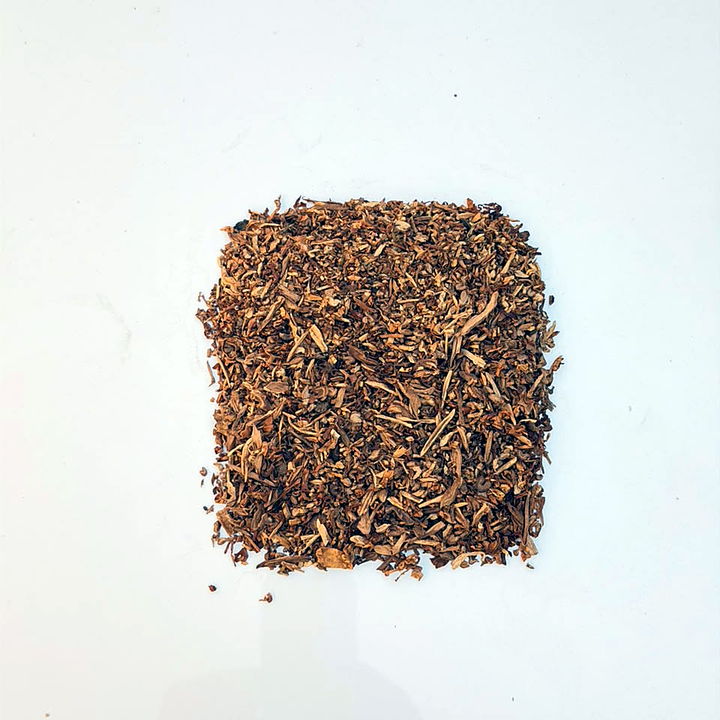
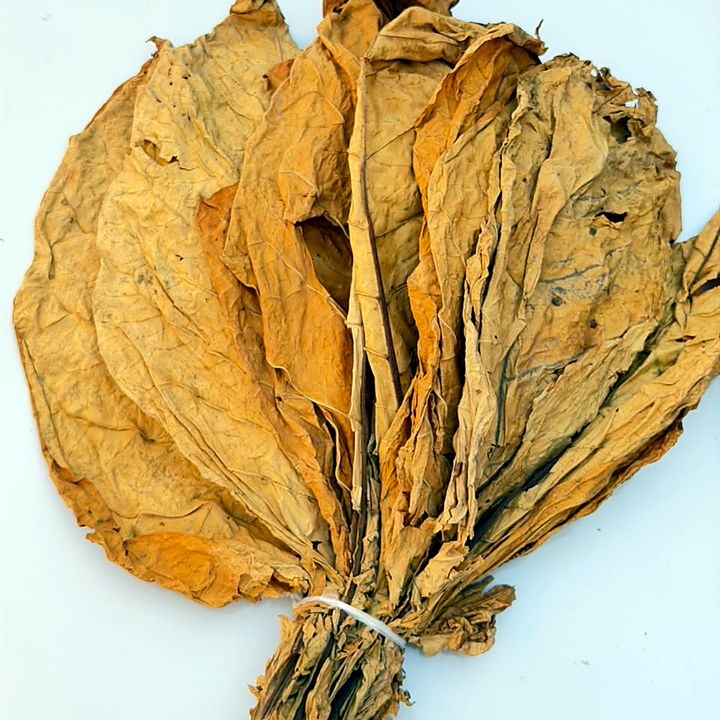
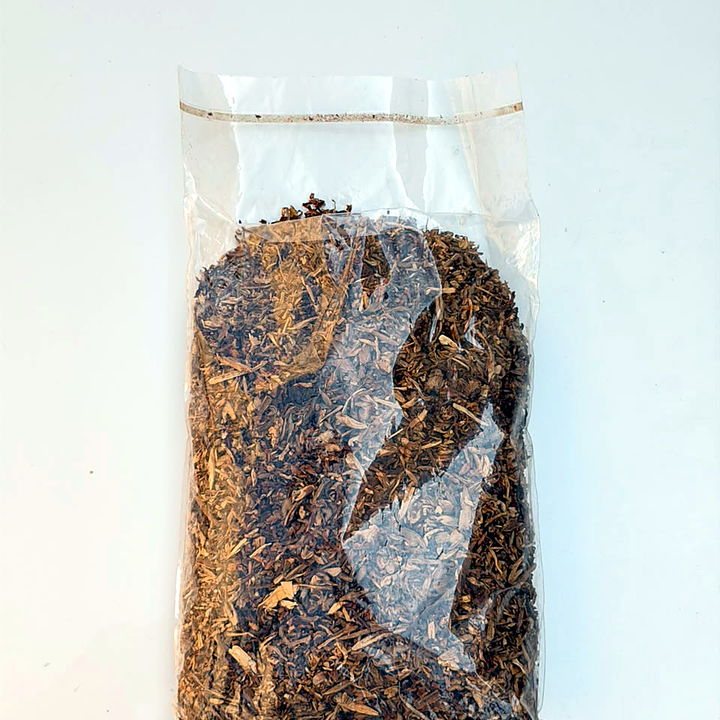
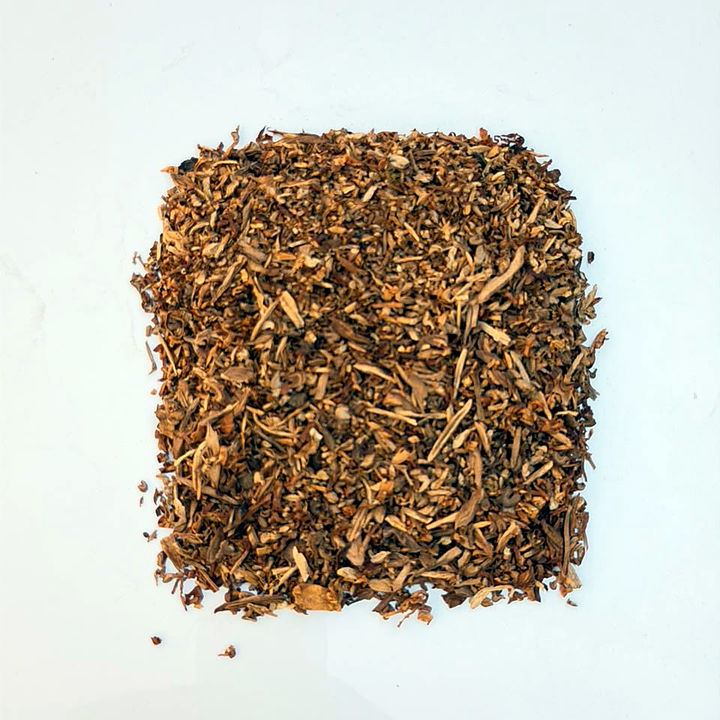
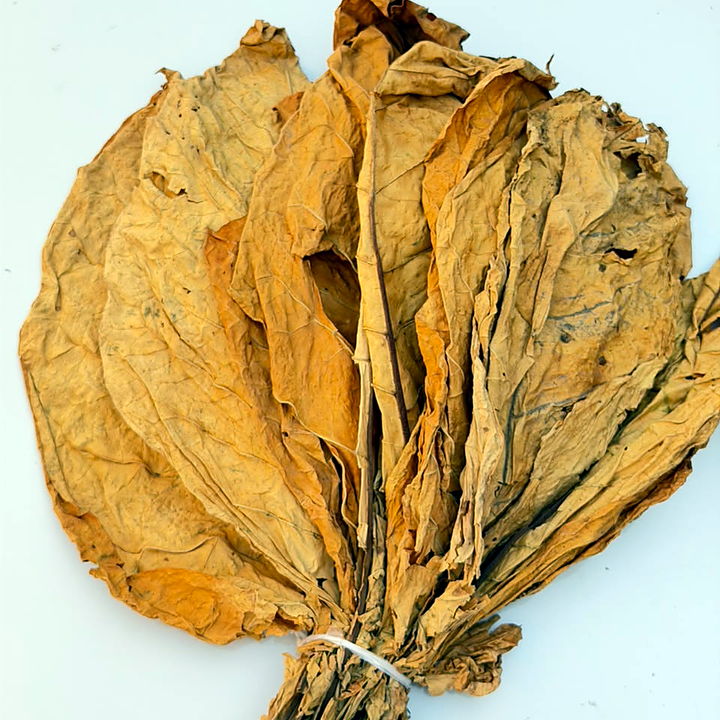
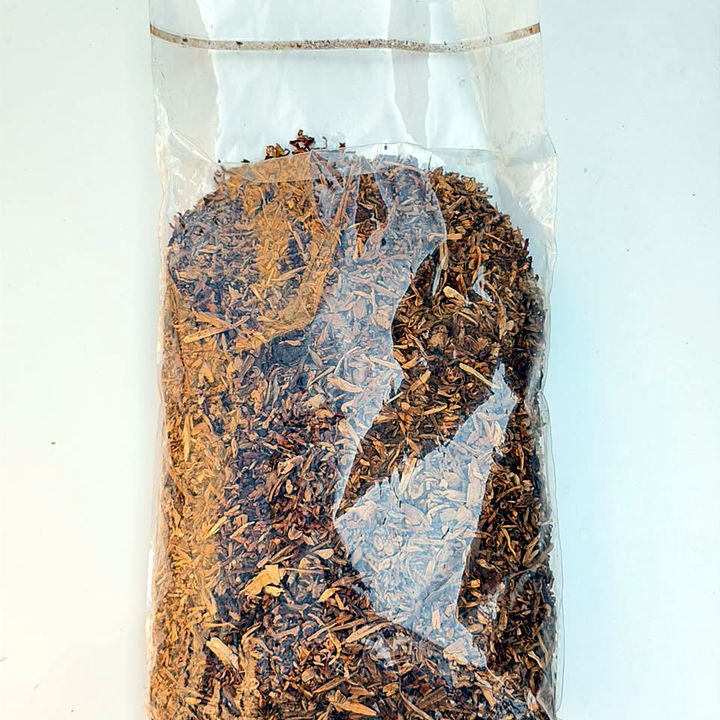
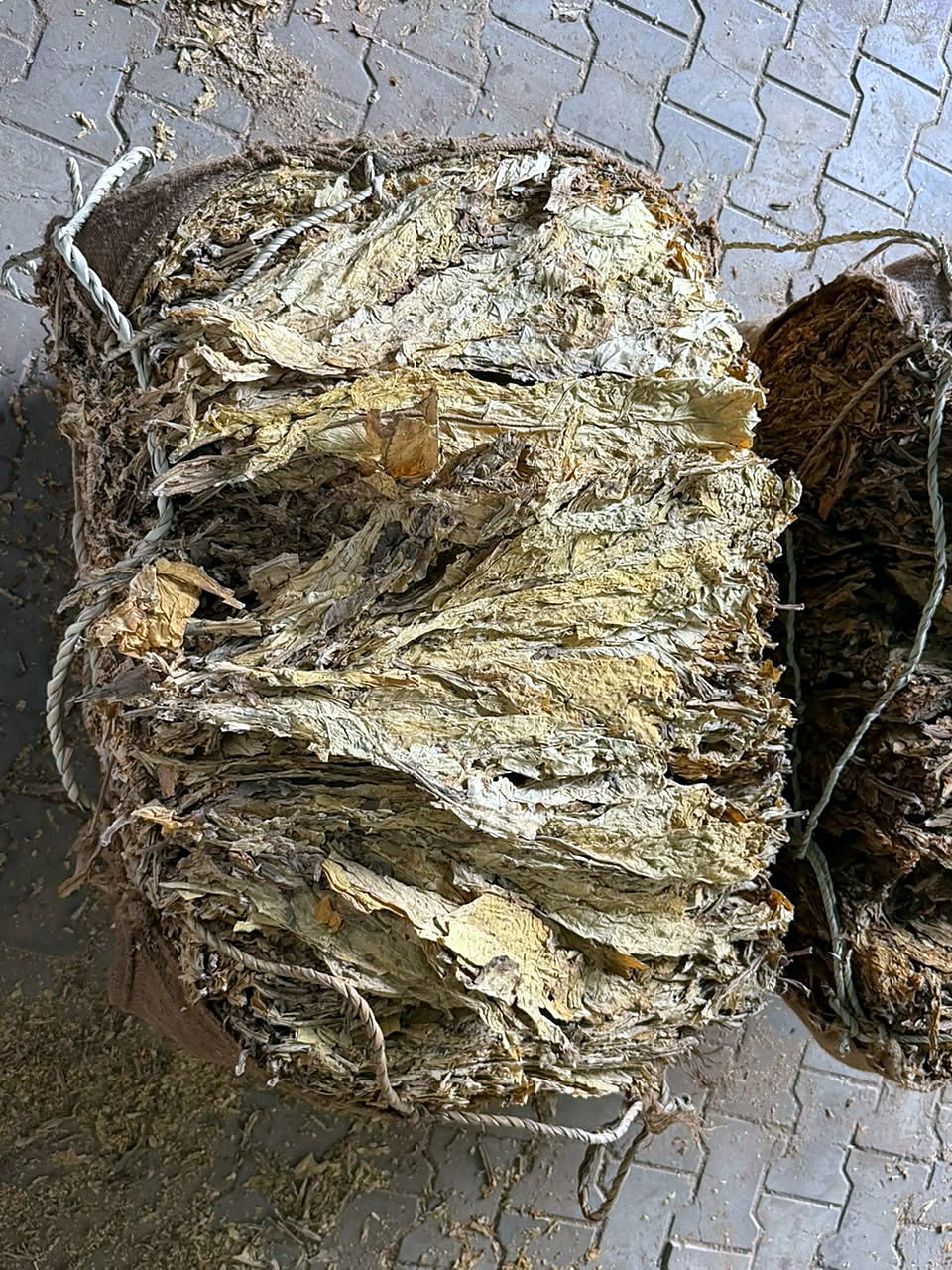
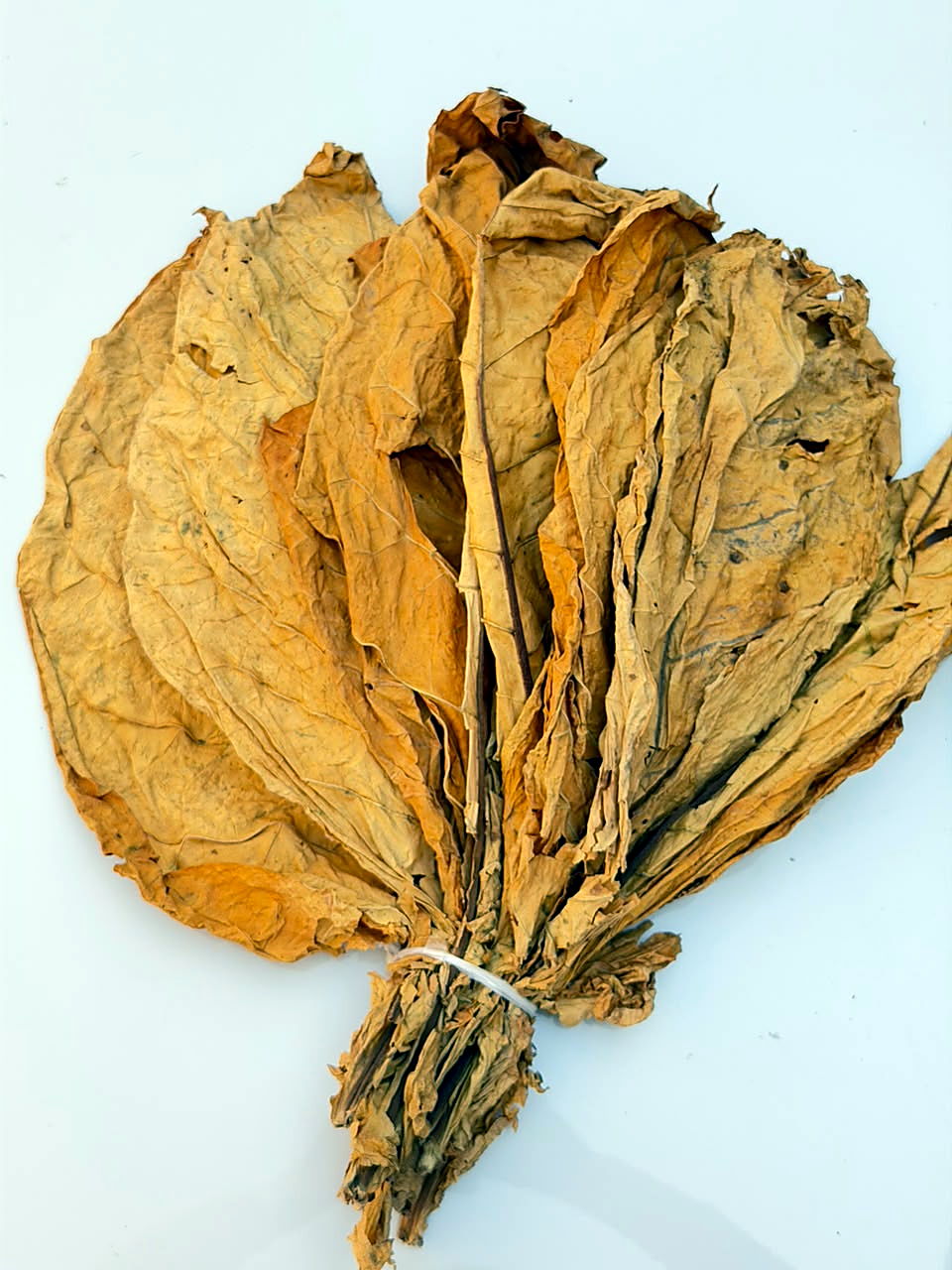
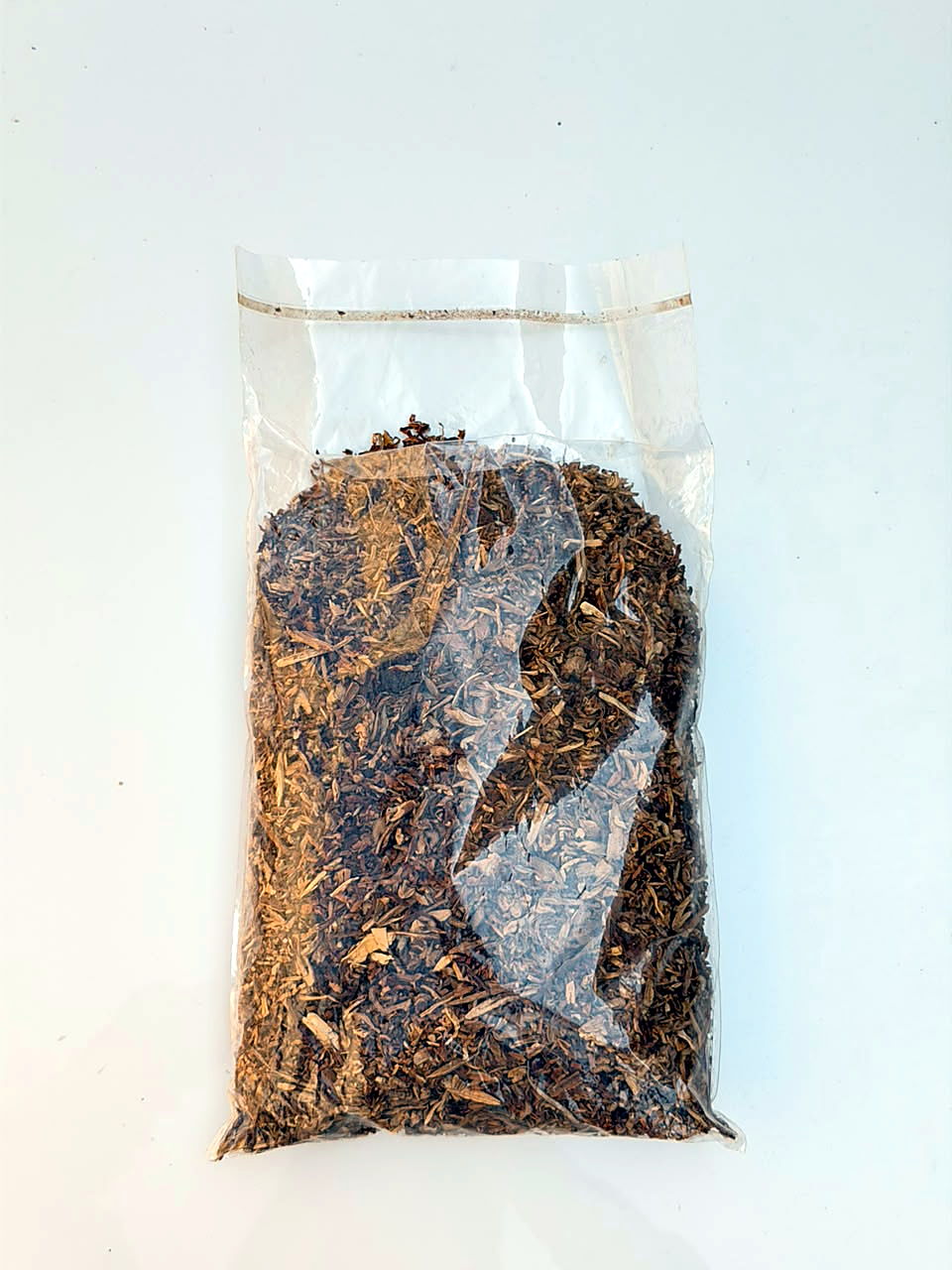
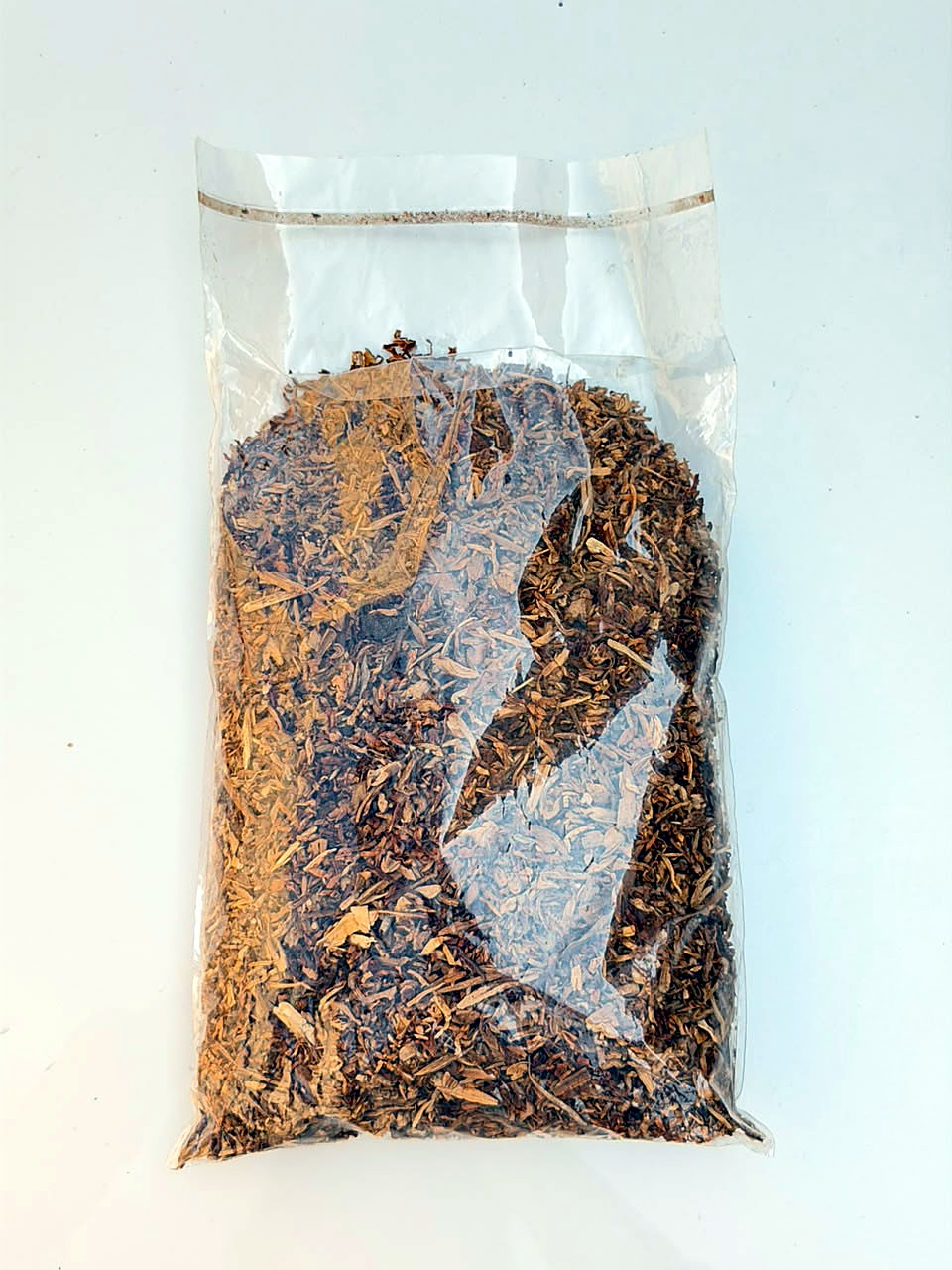
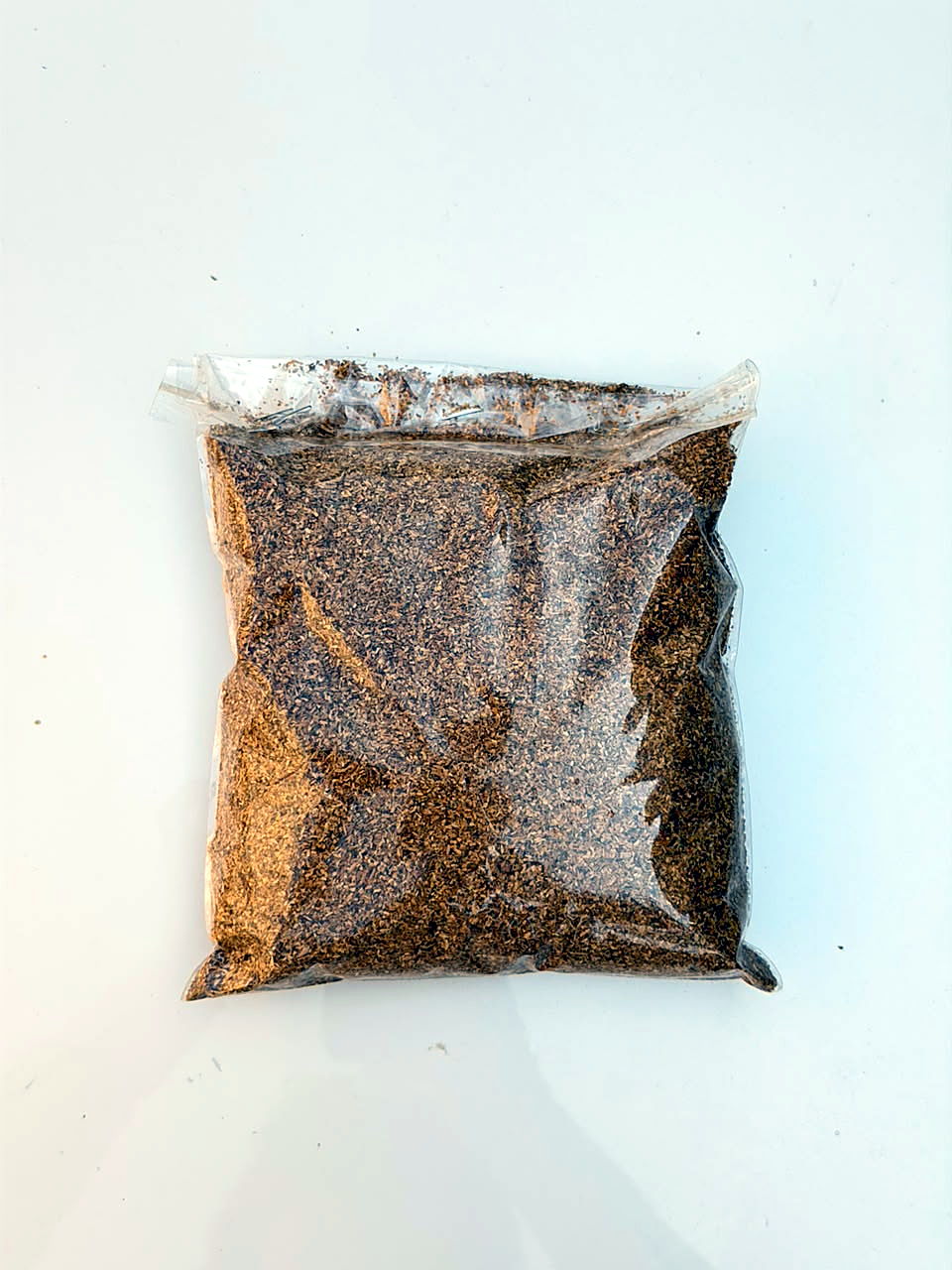
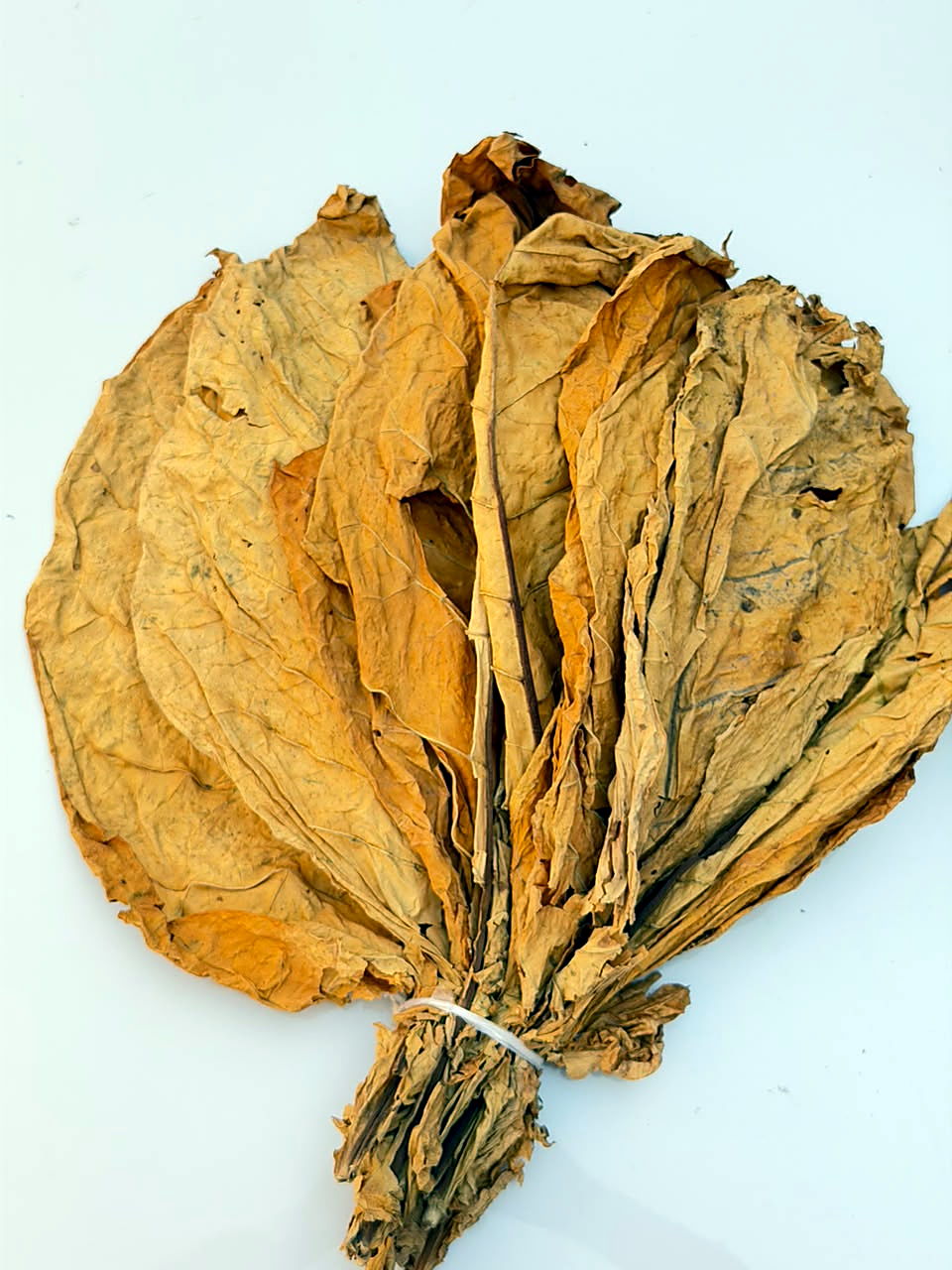
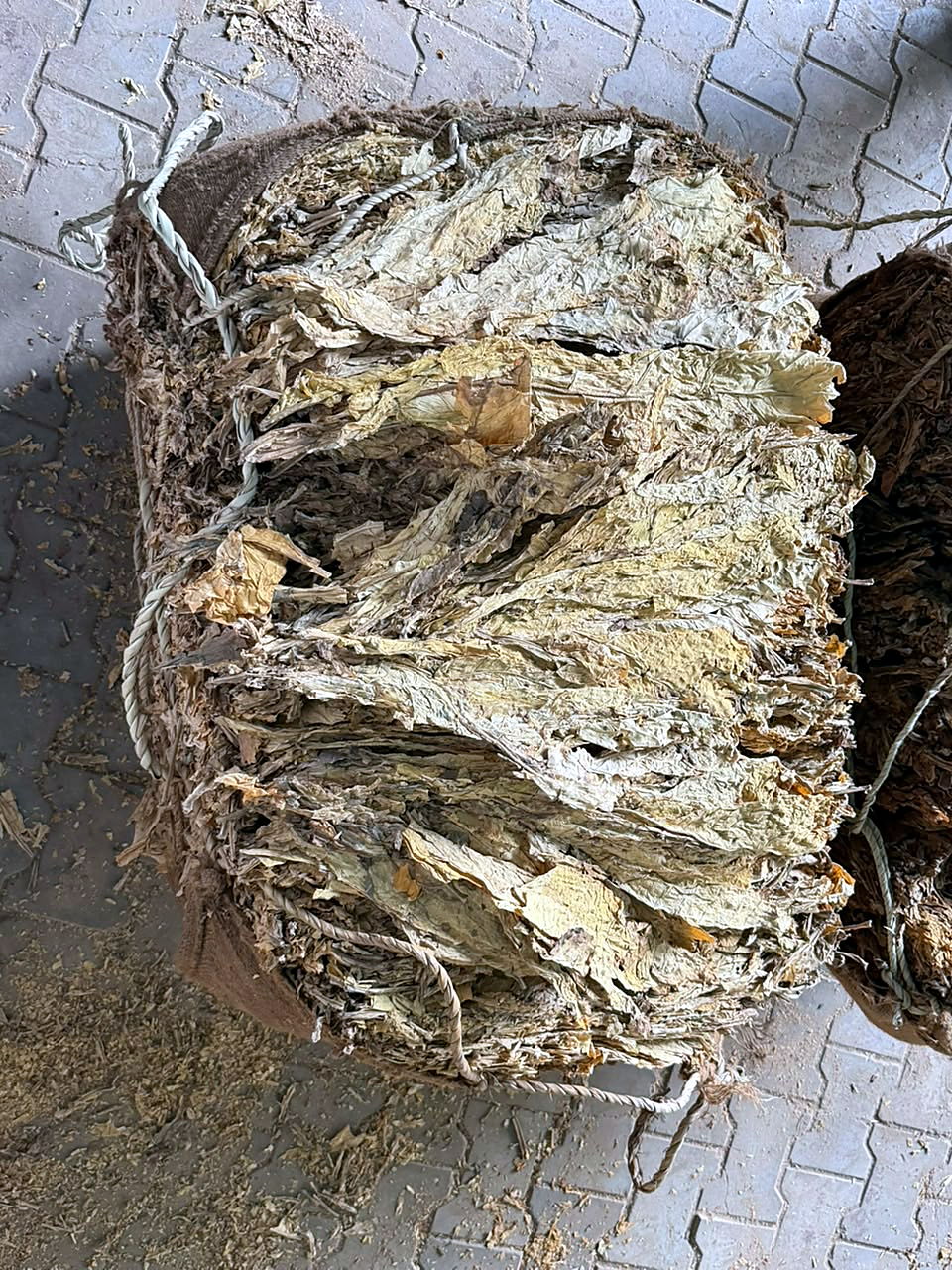
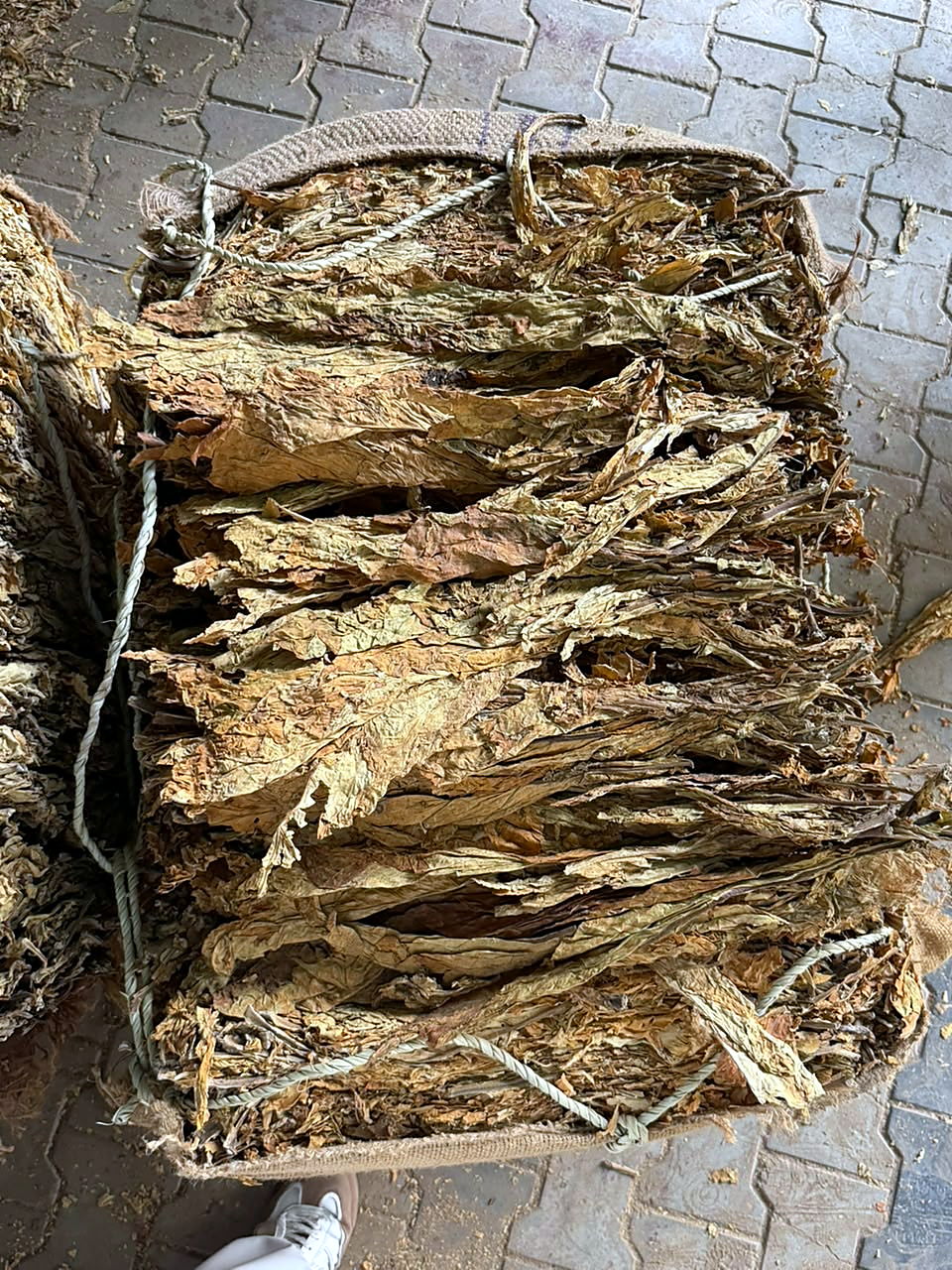
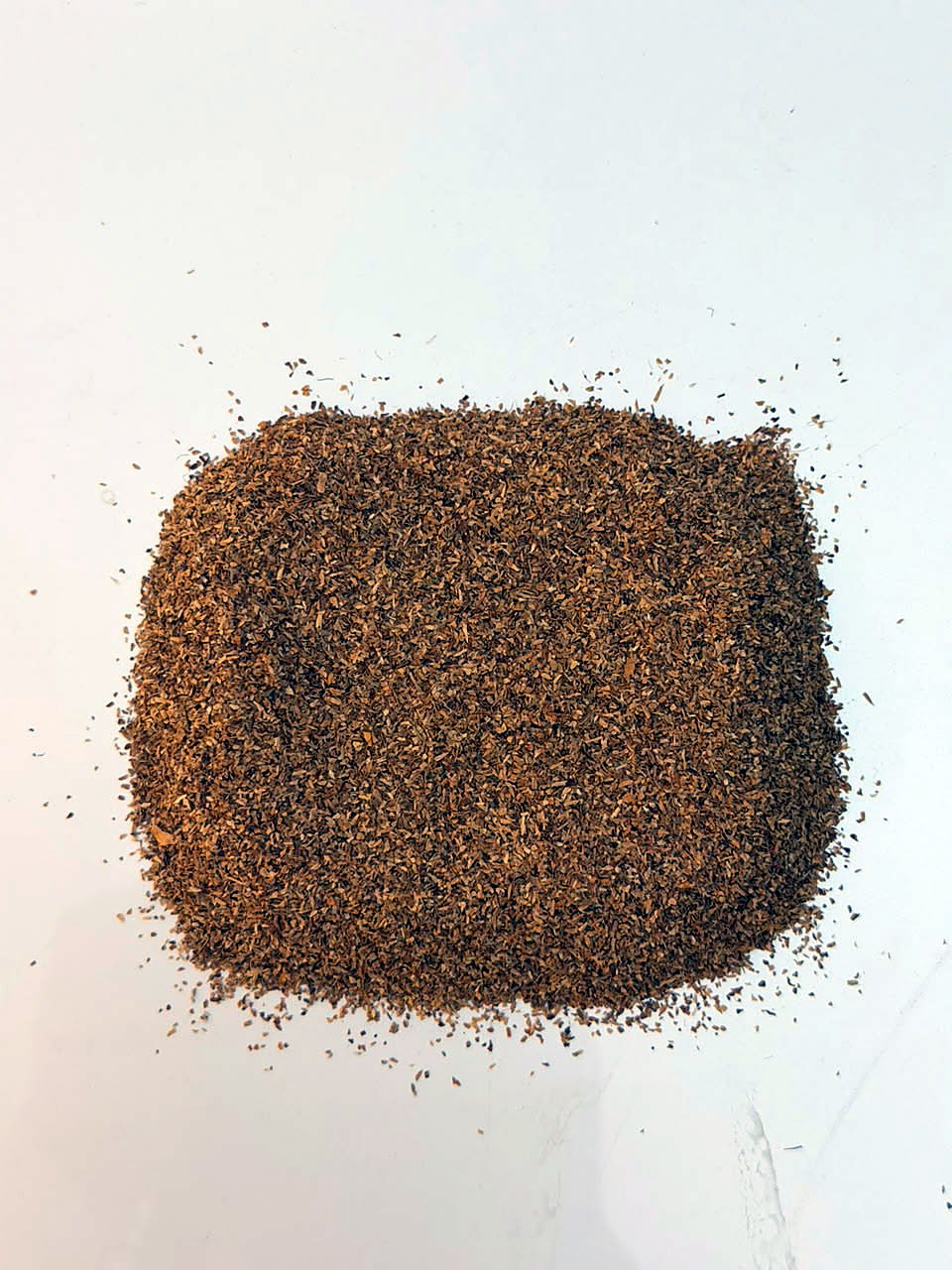
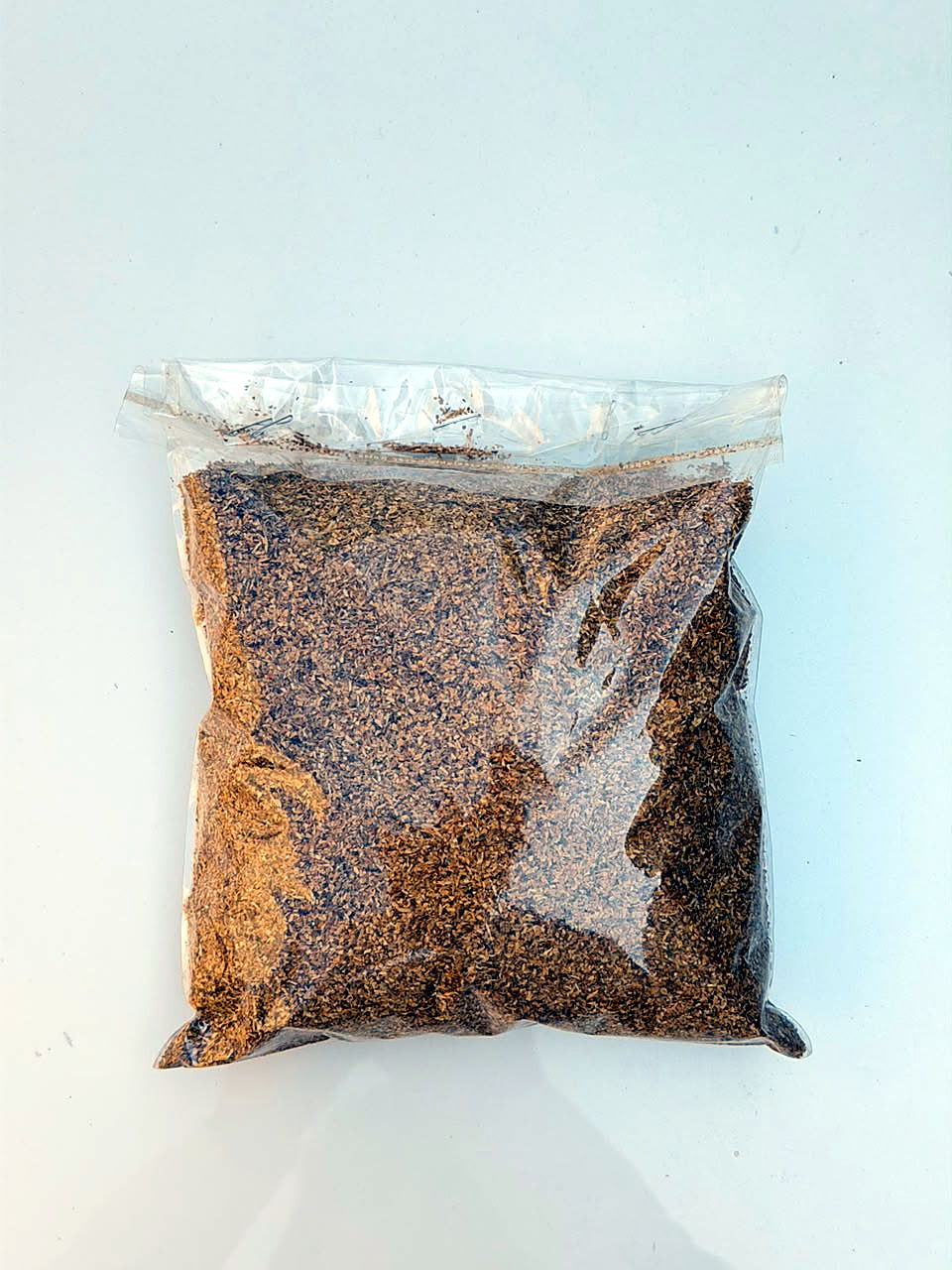
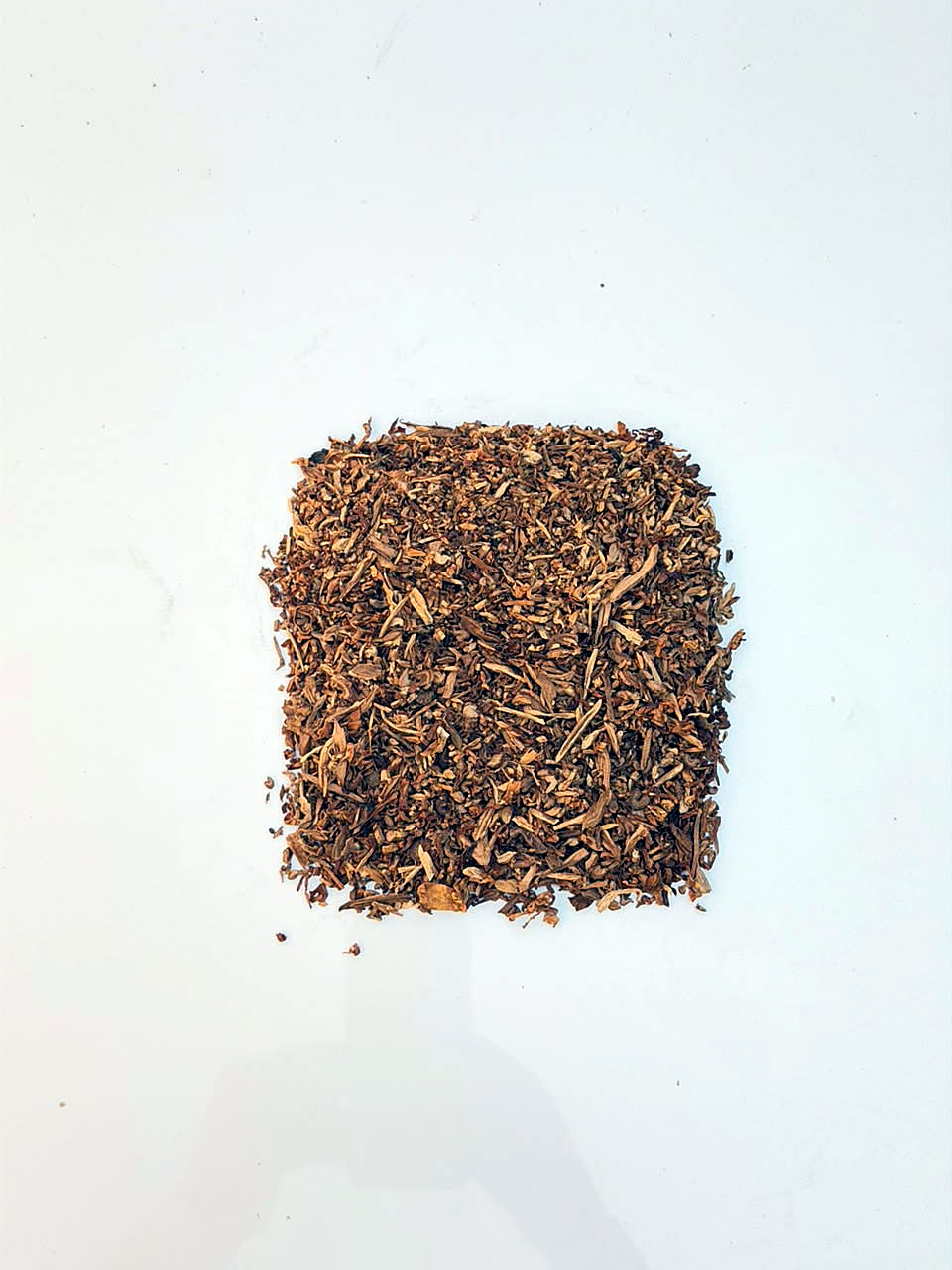
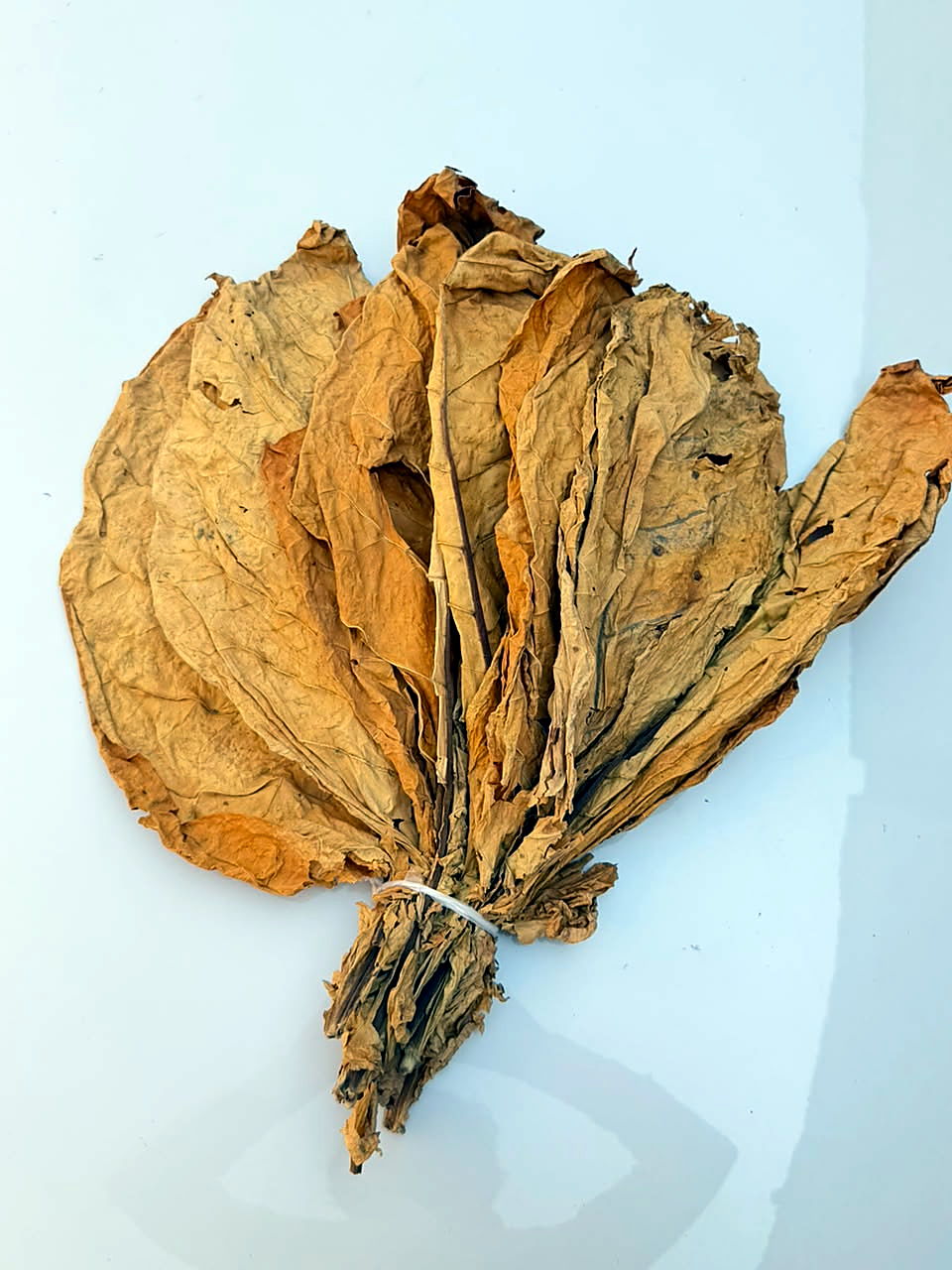
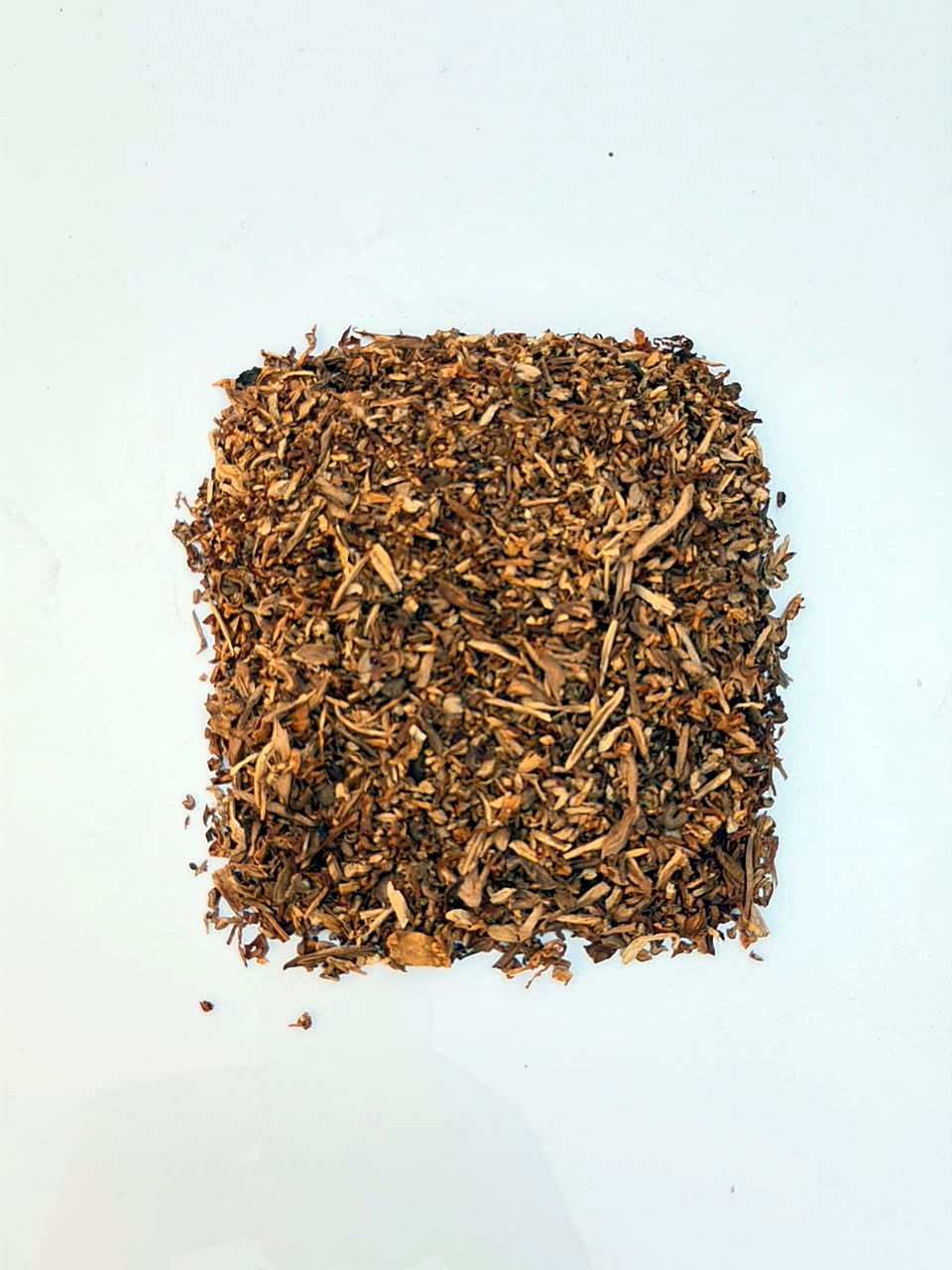
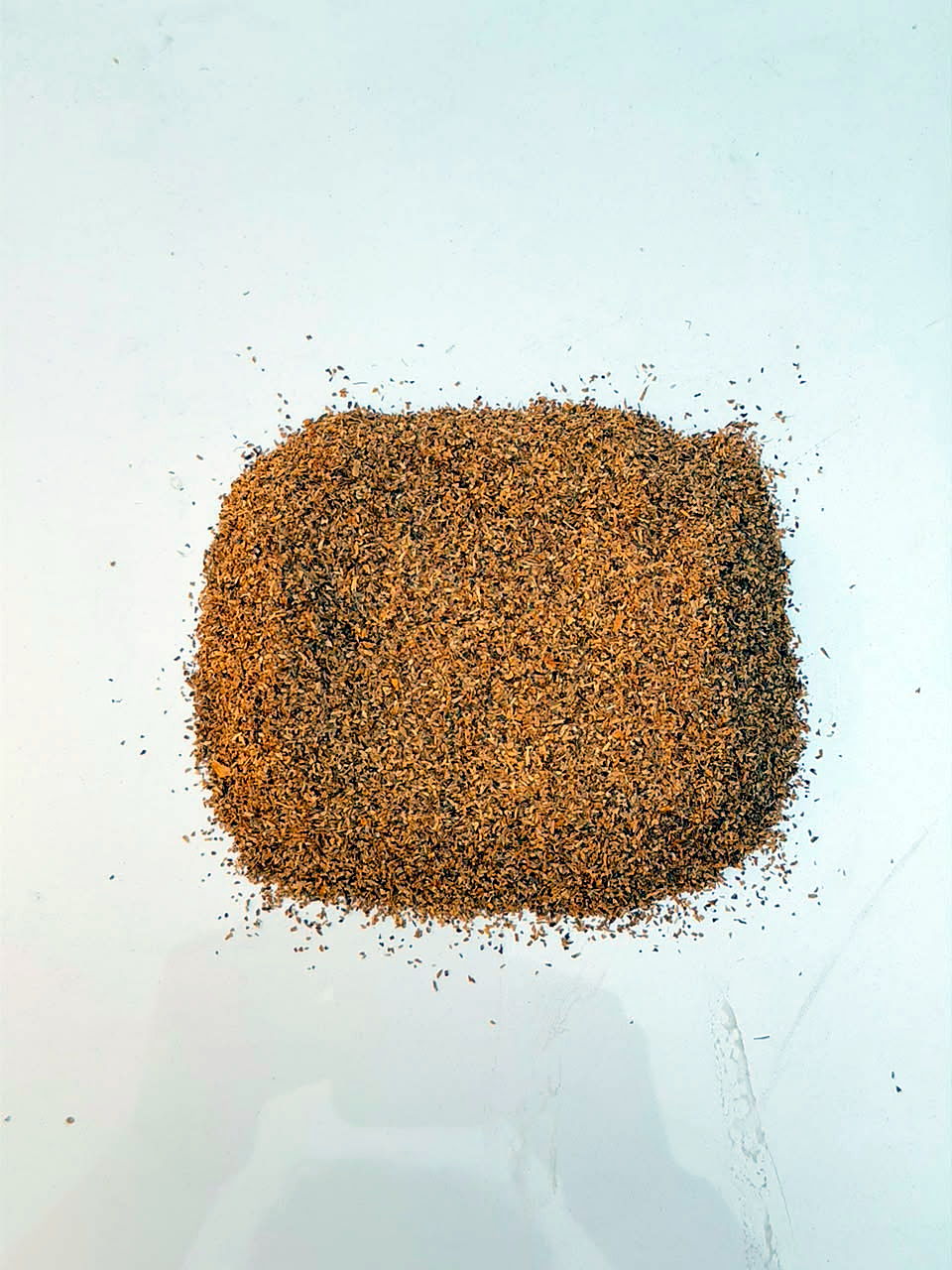
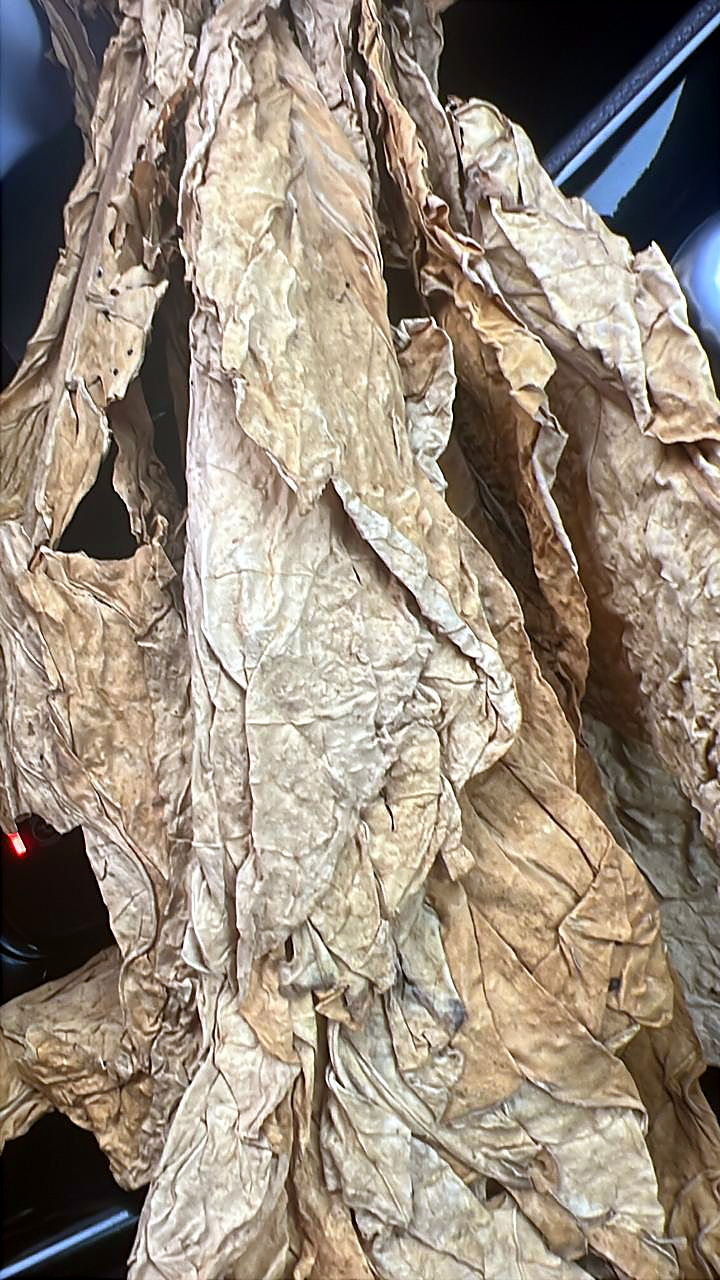
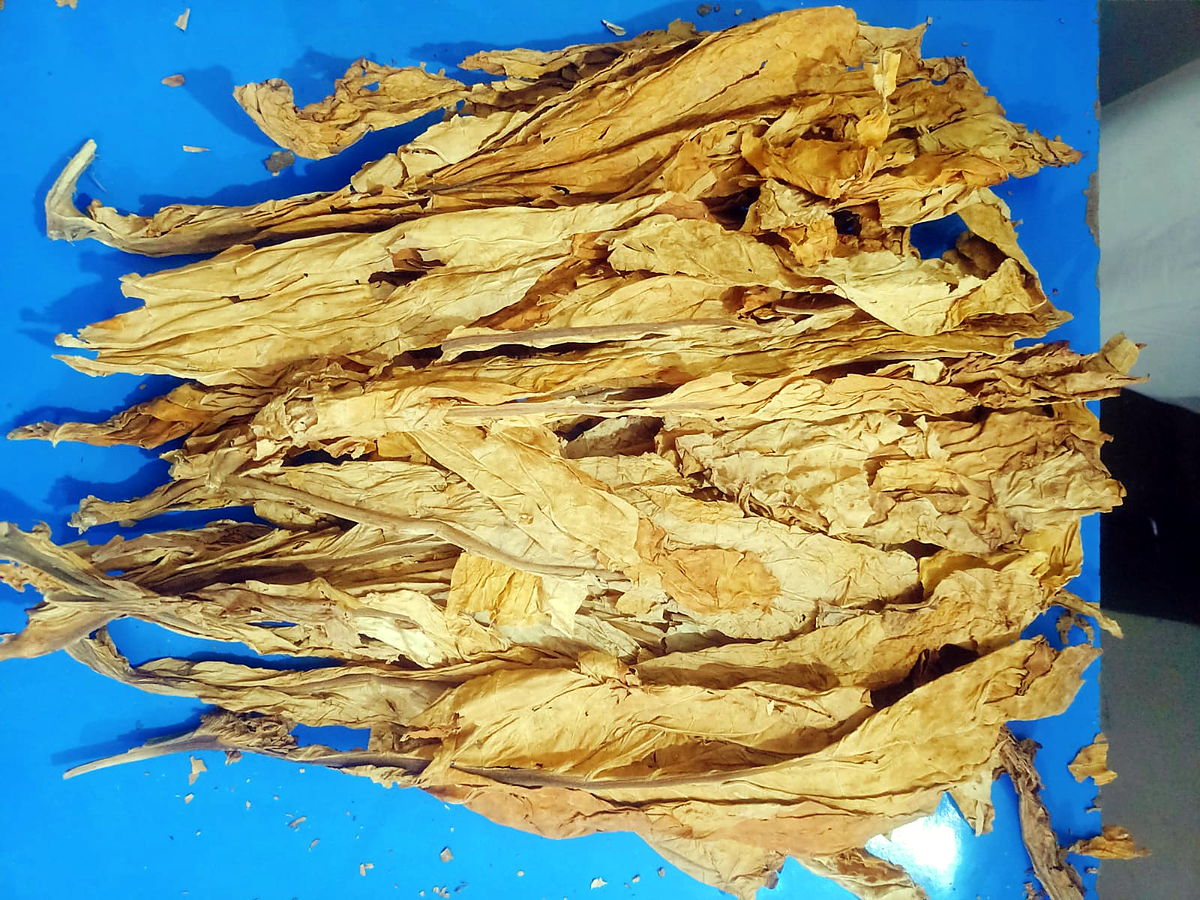
Photographs of the leaf and samples as we handle them. Colour and body vary by stalk position, colour class, crop year and lot; ask for current photographs of the specific lot with your quotation.
Grade and colour compatibility
This processing form is available across the stalk positions and colour classes below. Availability is lot-dependent and confirmed against the current crop year at the time of enquiry.
| Code | Stalk position | Colour range | Nicotine (indicative) | Body |
|---|---|---|---|---|
| P | Primings | Lemon to Lemon-Orange | Low (0.8–1.5%) | Light |
| L | Lugs | Lemon-Orange to Orange | Low–moderate (1.2–2.0%) | Light–medium |
| C | Cutters | Orange to Variegated | Moderate (2.0–2.8%) | Medium |
| X | Smoking Leaf | Orange to Variegated | Moderate–high (2.5–3.2%) | Medium–full |
| F | Leaf | Orange to Red | Moderate–high (2.8–3.5%) | Full |
| T | Tips | Red to Mahogany | High (3.0–4.0%+) | Full–heavy |
Bright yellow. Highest-quality colour. Associated with primings and lugs from well-managed crops.
Yellow-orange. Common in lugs and lower cutters. Good colour development.
Bright orange. Mid-stalk standard colour. Most common commercial colour class.
Mixed orange and red tones. Typical of mid-upper stalk positions.
Deep red-orange. Upper stalk. Higher nicotine associated.
Dark reddish-brown. Tips and sub-mountain leaf. Highest nicotine range.
Green tones indicating incomplete curing or early harvest. Lower commercial value.
Dark or mixed colour. By-product grades and lower-quality lots.
Frequently asked questions
Hand-stemmed, or hand-stripped, tobacco is cured Virginia leaf from which the midrib has been pulled out by hand, leaving large, intact half-leaves of lamina with very little fines and almost no mechanical damage. It is de-ribbed leaf that still looks like leaf, unlike the sized strips a threshing line produces.
For large lamina pieces and a low fines fraction. Hand stemming keeps half-leaves intact and leaves fewer stem fragments in the lamina; machine stemming is faster and cheaper but breaks more lamina. If your product uses lamina in pieces, or fines are a loss for you, hand-stemmed is worth the premium; for standard cut rag it usually is not.
Products that use lamina in pieces rather than fine-cut, blenders who cut in-house and want control of the cut, manufacturers whose primary is a stemming line rather than a threshing line, and small high-value lots where mechanical processing would waste too much. Tell us the product and the commercial team will say whether the form fits.
By stalk position and colour class, then by the minimum share of lamina in large pieces, the maximum fines and the maximum stem residue, all in the terms you measure, plus the nicotine range and other chemistry, the moisture at packing and the packaging. Defining large and clean in numbers is what makes the quotation accurate.
Yes, per kilogram of lamina, because labour replaces the machine and because intact lamina is what you are paying for. Against that there is little fines loss and no stem to dispose of. Price is quoted against a written specification and the current crop; the catalogue shows indicative price bands: FCV 8–10 USD/kg, scraps 4–5 USD/kg FOB, volume-dependent.
In C48 cartons of about 140–200 kg net or jute bags of about 50 kg, labelled with grade, colour, crop year, lot reference and net weight. C48 cartons load to roughly 15–20 MT in a 20 ft container; cartons to roughly 18 to 20 MT. Shipments are FOB, shipped to any port (loading at Karachi or Port Qasim) with a one-container minimum by sea.
Yes. Representative samples are drawn from candidate lots once buyer verification is complete and a specification is agreed, with a laboratory report per lot. Inspect the sample for lamina size, fines and stem residue as well as reading the chemistry.
Related information
Watch the leaf
See it move before you ask for samples
Short clips filmed in our store, on the grading floor and on the processing line. Whole leaf, cut leaf, strips, stems and sample bags, exactly as buyers see them before a container is packed.
Now playing · Golden flue-cured Virginia whole leaf
Contact sheet · real photographs
Our leaf, as we handle it
Whole leaf, hands of leaf, strips, fines and sealed samples from our own stock. See all 37 photographs.
Buyer feedback
What buyers say about working with us

Very Professional Company, for FCV tobacco a must considering company with a huge variety of Tobacco Leaves to buy for our brand of cigerettes.
Reply from FCV TobaccoThank you, Elena. Variety is exactly what we build our grade list around, so it is good to hear it made the selection for your brand easier. We look forward to the next lot.
Read on Google →
A very good company to work with. They are professional, reliable, and always deliver on time. Working with them has been a great experience, and I truly appreciate their commitment and service.
Reply from FCV TobaccoThank you, Shehzad. Delivering on the agreed window is something we take seriously, and we appreciate you saying so. Always a pleasure working with your team.
Read on Google →
Professional Company - Highly Recommended for FCV Tobacco in bulk. We are dealing with them for a long time.
Reply from FCV TobaccoThank you, Mehak. Long-standing relationships like yours are the best recommendation we could ask for. We appreciate your continued trust in our FCV supply.
Read on Google →كانت تجربتي مع خدمة العملاء ممتازة. التواصل كان سريعًا ومحترفًا، وتم التعامل مع الطلب والاستفسارات بوضوح واهتمام، ووصل كل شيء بشكل منظم كما توقعت.
Translated from Arabic: My experience with the customer service was excellent. Communication was fast and professional, the order and enquiries were handled clearly and attentively, and everything arrived well organised, as I expected.
Reply from FCV TobaccoThank you very much for your kind review. We appreciate it.
Read on Google →